
Service Detail
Synthetic Grass Installation in Sugar Land, TX
Professional synthetic grass installation for Sugar Land, TX and surrounding communities.
Service Overview
How synthetic grass installation projects are scoped.
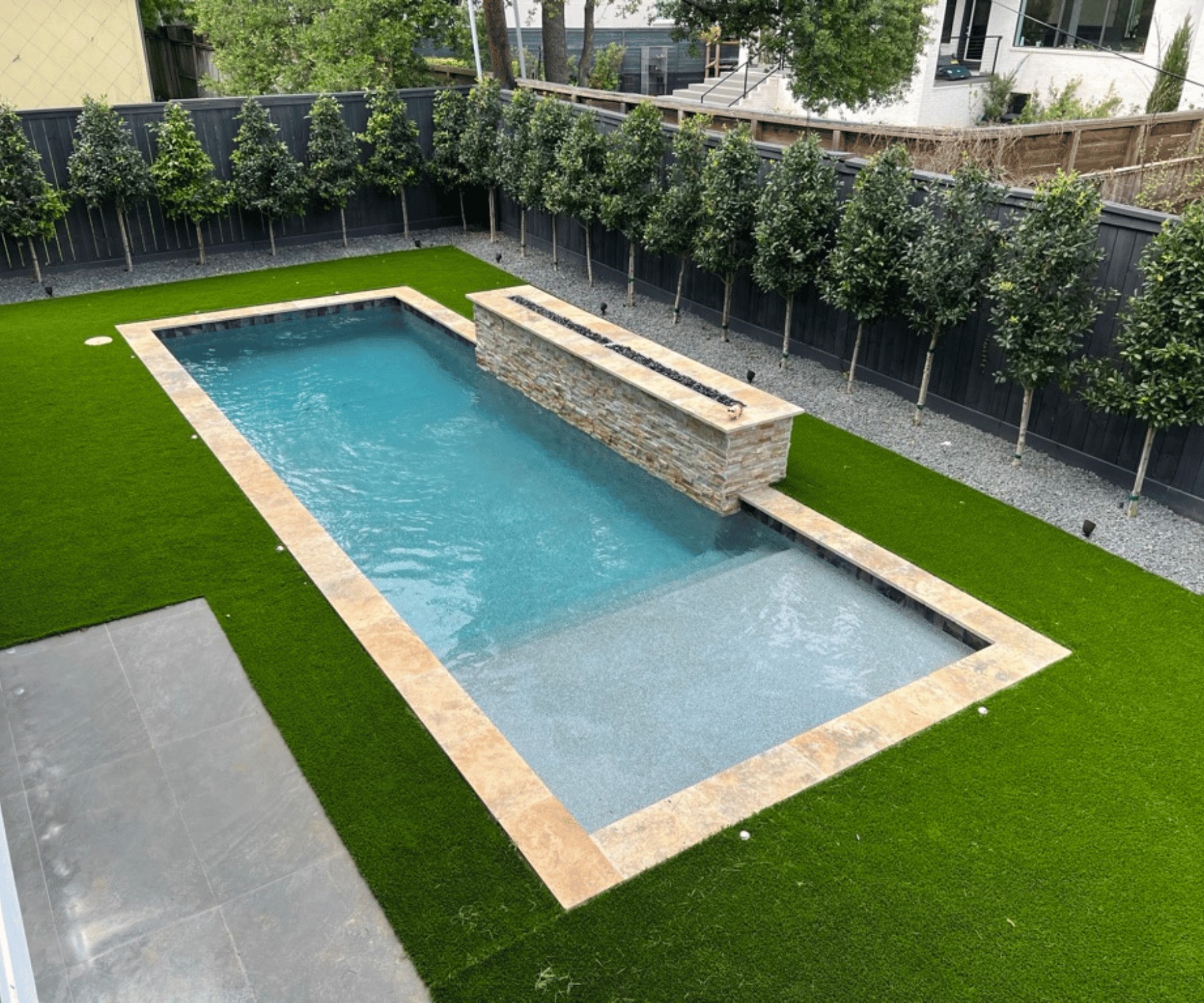
Transform your outdoor space with our high-quality synthetic grass installation services. Our realistic synthetic turf provides a lush, green lawn without the hassle of traditional grass maintenance.
Primary Fit
Synthetic Grass Installation
Service Area
Sugar Land + nearby cities
Common Uses
Saves water and reduces utility bills
Project Goal
Realistic appearance and texture
What The Work Includes
Key features
- Realistic appearance and texture
- Advanced drainage technology
- Multiple pile heights available
- Environmentally friendly materials
- Professional seam finishing
Why Customers Choose It
Project benefits
- Saves water and reduces utility bills
- Eliminates mud and puddles
- No fertilizers or pesticides needed
- Perfect for shaded areas
- Consistent appearance all year
Detailed Service Content
More about synthetic grass installation
The long-form service copy stays intact, but it now renders inside the redesigned content system rather than the older template.
Synthetic grass installation in the Fort Bend County context requires matching the right product to the right site before a single roll is cut. The communities served from Sugar Land—Telfair's tight courtyards, Greatwood's mature landscape zones along the Brazos corridor, Sienna Plantation's streets that bridge Missouri City and Sugar Land, First Colony's village cul-de-sacs where every front yard is visible from the park path—each present distinct conditions that affect which synthetic grass system performs well over time.
Why Material Selection Comes Before Installation
The synthetic grass industry produces a wide range of products that differ in fiber type, pile height, blade shape, face weight, backing permeability, and infill compatibility. These variables are not interchangeable. A product selected for its appearance in a showroom photograph may not perform well on a Sugar Land side yard where standing water pressure tests the backing after a tropical depression.
Artificial Grass of Sugar Land evaluates site conditions first, then matches product specifications to those conditions. That evaluation includes soil type—Fort Bend's expansive clay behaves differently than Harris County sand—drainage infrastructure, shade exposure, primary use pattern, and whether the installation needs to pass HOA architectural review. Only after that assessment do we recommend a product line.
Fiber Types and Their Relevant Differences
Polyethylene fibers are standard in premium residential applications. They produce a softer blade feel underfoot and blade colors that photograph well, which matters for First Colony front yards where resale photos and curb appeal drive decision-making. Polyethylene fibers hold their shape through Sugar Land's extended heat stretches better than polypropylene alternatives.
Nylon fibers carry higher tensile strength and recovery after compression. They are appropriate where sustained heavy traffic—commercial frontages along Highway 59, apartment common areas near the Beltway 8 interchange, corporate campus entry zones—will repeatedly compress the surface. Nylon is also the correct choice for putting greens where blade rigidity affects ball roll consistency.
Polypropylene covers the value tier. It is suitable for decorative zones, low-traffic accent areas, and temporary or budget-constrained applications where long-term durability is not the priority.
Backing and Drainage Performance
The backing system controls how water moves through the turf surface. Primary backing—where the fiber tufts are anchored—is typically a woven polypropylene fabric. Secondary backing provides dimensional stability. The drainage rate through the total backing system, expressed in inches per hour, determines how quickly the turf drains after rainfall.
In Sugar Land, where single-storm rainfall can exceed four inches in a matter of hours, a drainage rate well above that threshold is the baseline expectation. Premium backing systems achieve 30 inches per hour or more through perforated polyurethane or open-weave construction. For properties in lower-lying zones—the Brazos corridor neighborhoods, the detention-adjacent sections of Riverstone—we prioritize backing permeability as a non-negotiable specification.
Blade Geometry: What Actually Matters
Blade cross-section geometry affects how the turf recovers after compression and how it manages thermal performance on hot Fort Bend summer days.
Flat blades lay down under foot traffic and take longer to recover. They are economical but tend to develop permanent lay patterns in high-use corridors over time—visible in front entryways, dog run edges, and the paths children create between the back door and a play structure.
C-shaped and W-shaped blade cross-sections create internal air channels that help the blade spring back after compression. This is the relevant geometry for residential backyards in Telfair or Greatwood where multi-generational households—the extended family configurations common in Fort Bend's Indian, Pakistani, and Chinese communities—rotate through the outdoor space throughout the day. The surface needs to look composed when the next group comes out, not matted from the last.
Diamond and S-shaped profiles represent premium geometry with enhanced recovery and reduced glare from indirect sunlight, appropriate for high-visibility commercial installations.
Infill Systems and Why They Differ by Application
Infill serves three functions: keeping blades upright, adding mass to anchor the product, and contributing to thermal and drainage performance. Infill selection is not standardized across applications.
Silica sand is the baseline option for most residential installations. It is stable, inert, pH-neutral, and does not affect blade color. Standard round-grain silica flows well between blades without clumping. For multi-use family yards in First Colony or New Territory, silica sand is typically appropriate.
Antimicrobial-treated infill is the correct specification for pet-focused installations. The antimicrobial compounds reduce bacterial growth in the zone where pet waste contacts the infill layer. Combined with adequate drainage, this manages odor buildup more effectively than silica sand alone.
Organic infill options—cork, coconut husk, thermoplastic elastomers—are used where surface temperature management is a priority. These materials absorb less heat than black rubber crumb and release it more slowly. For outdoor spaces in Sugar Land where afternoons through the extended summer calendar are spent in the backyard—badminton in the side yard, cricket in the larger lots of Greatwood, children's play equipment on the grass pad—surface temperature directly affects usability.
Rubber crumb from recycled tires contributes to fall height performance and is appropriate in playground applications where impact attenuation certification matters.
HOA Compliance in Fort Bend's Premium Communities
Sugar Land's planned communities maintain architectural standards that can affect synthetic grass installation. First Colony's covenants address frontage appearance. Telfair's standards speak to material quality and installation finish. Riverstone's Newland community documents include landscaping guidelines.
We have navigated these processes for Sugar Land installations across multiple neighborhoods. The approach is straightforward: we document the product specification fully, explain the installation methodology, and provide enough technical detail for the architectural review committee to evaluate the project against existing standards. Most reviews proceed without issue when the product and installation quality are clearly above the visual threshold the community maintains.
Transition Details That Affect Long-Term Appearance
The quality of a synthetic grass installation is often most visible at its edges. Poor transitions between turf and concrete, pavers, mulch beds, or planting borders look unprofessional and can allow the turf edge to lift over time. We use appropriate edging systems for each condition: concrete anchor bolts for hardscape transitions, bender board or aluminum edging for garden bed borders, and buried header board for perimeter containment on free-standing lawn panels.
On Sugar Land properties where a covered patio transitions directly to a turf backyard—a common configuration in Riverstone and Telfair—we pay close attention to the threshold detail at the covered structure edge. Water management at that transition prevents moisture from channeling under the turf field, which could affect base performance over multiple seasons.
The goal at completion is a surface that looks intentional at every boundary, not just in the center of the installation.
Project Step
Consultation
We evaluate the site, traffic level, drainage, edges, and how you want the surface to perform once the project is finished.
Project Step
Product Match
Material selection is tied to the project. Lawn replacements, pet areas, putting greens, and commercial spaces all need different performance priorities.
Project Step
Prep + Install
Base work, seam placement, edges, and infill are all handled with the finished appearance and long-term stability in mind.
Project Step
Final Walkthrough
We review the completed surface with you, confirm care expectations, and make sure the space is ready for normal use.
FAQs
Questions about synthetic grass installation
These answers remain tied to the service route and continue supporting the page’s FAQ schema.
What synthetic grass product specifications should I bring to my HOA review?
We provide manufacturer spec sheets that include pile height, face weight, blade color swatch, UV resistance rating, and drainage performance data. Most HOA review committees in First Colony, Telfair, and Riverstone accept this documentation as sufficient for an approval decision.
How does synthetic grass perform in Sugar Land's extended summer heat?
Premium polyethylene products with UV stabilization maintain structural integrity through Fort Bend summers. Blade color stabilization prevents significant fading under direct sun. Infill selection—particularly organic or TPE options over rubber crumb—reduces surface temperature in the hottest afternoon hours.
Is there a drainage performance minimum I should specify for Fort Bend properties?
For properties in Sugar Land where tropical storm rainfall is a realistic scenario, we recommend backing systems rated at 30 inches per hour or higher. For properties in lower-lying zones near the Brazos corridor, backing permeability is the single most important specification to get right.
What is the right infill for a backyard used by multiple generations of family?
Silica sand is typically the right base infill for multi-use residential yards. For areas where pets also use the space, we add an antimicrobial layer. Where afternoon heat is a usability concern—especially in south and west-facing yards in Greatwood and New Territory—we discuss organic or cooling infill options.
How do edge transitions affect long-term performance?
Poorly detailed transitions are where most synthetic grass installations develop problems—lifting edges, cracking adhesive, turf migration toward the property line. We engineer the transition for each specific boundary condition on your property rather than using a single approach for all edges.
Related Service Areas
Find this service in the cities we cover.
The service route now connects visually and structurally to the location pages instead of leaving the templates disconnected.