
Service Detail
Residential Turf Installation in Sugar Land, TX
Professional residential turf installation for Sugar Land, TX and surrounding communities.
Service Overview
How residential turf installation projects are scoped.
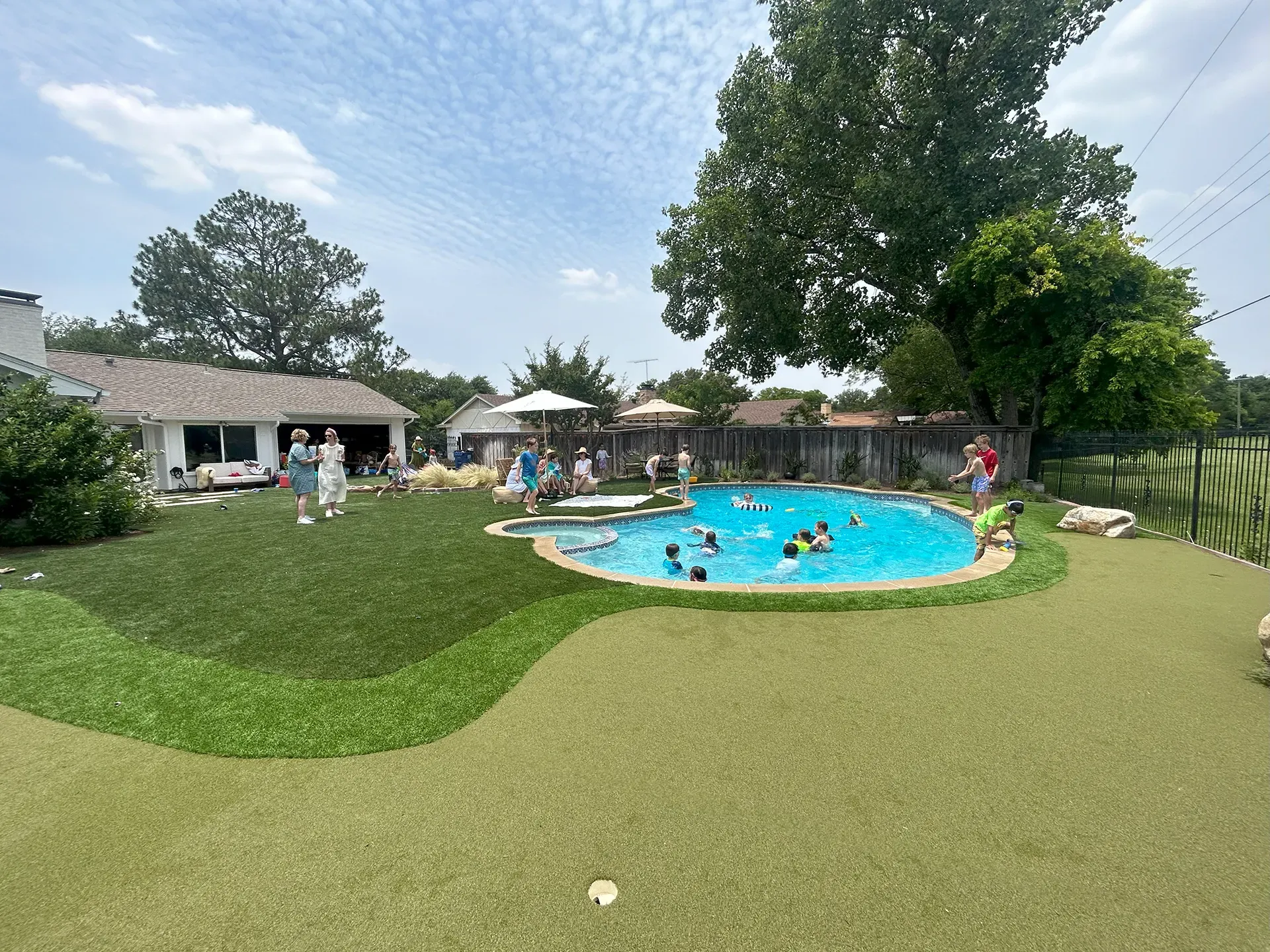
Enhance your home's curb appeal with our residential turf installation services. We create beautiful, functional outdoor spaces that your family can enjoy year-round without the burden of lawn maintenance.
Primary Fit
Residential Turf Installation
Service Area
Sugar Land + nearby cities
Common Uses
More time to enjoy your yard
Project Goal
Custom designs for front and back yards
What The Work Includes
Key features
- Custom designs for front and back yards
- Child and pet-safe materials
- Seamless integration with existing landscape
- Proper edging and finishing
- Variety of grass styles and colors
Why Customers Choose It
Project benefits
- More time to enjoy your yard
- No more weekend mowing
- Allergen-free environment
- Consistently beautiful appearance
- Increases home resale value
Detailed Service Content
More about residential turf installation
The long-form service copy stays intact, but it now renders inside the redesigned content system rather than the older template.
Sugar Land's residential landscape is one of the most distinctive in greater Houston. The First Colony master-planned development—subdivided across villages like Colony Meadows, Colony Lakes, Walnut Creek, and Sugar Creek—established a community standard that has set the expectation for curb appeal and outdoor space quality for more than four decades. Newer communities in Riverstone, Telfair, and Greatwood continue that tradition with increasingly sophisticated HOA guidelines. Residential turf installation in Sugar Land operates within that context.
What Residential Turf Solves in Sugar Land Neighborhoods
The core problem for many Sugar Land homeowners is not visual neglect—it is the gap between the standard a neighborhood holds and what a natural lawn can reliably deliver in a Fort Bend climate. Bermuda grass, the dominant turf species in established First Colony yards, goes dormant in November and browns through February. During the summer months, Bermuda survives but demands weekly mowing, consistent irrigation, and seasonal fertilization schedules. St. Augustine, used in shadier properties along the Brazos corridor and in older Greatwood sections, is vulnerable to chinch bugs, brown patch fungus, and drought stress.
Artificial Grass of Sugar Land installs residential turf for homeowners who want their property to hold its appearance without the maintenance cycle that natural turf demands in Fort Bend conditions. The finished result is a surface that reads as well-kept from the street on any day of the year—HOA inspection day included.
Front Yard Installation: What the Standard Requires
Front yard residential installations in Sugar Land are the most HOA-scrutinized turf work we do. First Colony's Architectural Review Board, Riverstone's landscaping standards, and Telfair's community guidelines each have distinct criteria for what frontage should look like. We have worked through the review process for homeowners across multiple First Colony village associations and can support the documentation package.
From an installation standpoint, front yard work in Sugar Land requires particular attention to:
Product selection for streetside visual performance. A 1.75 to 2-inch pile height with multi-tone blade coloring creates the depth effect that reads as a live, maintained lawn from the street. Single-color or flat-pile products look noticeably artificial at viewing distances typical of a residential street.
Edge treatment along sidewalks and driveways. Sugar Land's older First Colony sections often have concrete-edged landscape beds and offset sidewalk alignments that create irregular perimeter shapes. Clean, consistent edge anchoring at these transitions prevents lifting and maintains the manicured appearance HOA standards expect.
Transition to planting beds. Most Sugar Land front yards include mulch or decomposed granite beds with foundation plantings. The transition between turf and bed material needs to be planned so that neither migrates over time and the seam between materials remains clean through wind events and rain.
Backyard Installation: Multi-Use Spaces Across Fort Bend's Diverse Households
The backyard context in Sugar Land is meaningfully different from the front yard. Many Fort Bend residents—particularly in the multi-generational Indian, Pakistani, Chinese, and Vietnamese household configurations that are well represented across Telfair, New Territory, and the Highway 6 corridor communities—use backyard space for activities that extend the useful square footage of the home. A covered patio may serve as a family dining room extension. The open lawn may host badminton on weekend afternoons. A side yard may double as a kitchen garden plot with a perimeter grass buffer.
We design residential backyard installations to accommodate these specific uses rather than applying a single turf layout to every property. For families where outdoor cooking and extended gathering are central to backyard use, we plan drainage around the patio edge carefully so that cooking and dining areas do not create moisture channels under the adjacent turf field. For households where a portion of the backyard is reserved for vegetable or herb gardening—a common configuration in communities with South Asian and Southeast Asian cooking traditions—we design the turf perimeter to create a clear, maintained separation between the planted beds and the grass zone.
Pet-Integrated Residential Installations
Sugar Land's HOA communities are dog-friendly, and residential turf increasingly incorporates drainage and antimicrobial planning for properties with dogs. Pet-focused installation in a Fort Bend residential yard requires higher drainage rate specifications—backing systems rated above 20 inches per hour—and antimicrobial infill in the areas most used by the animal. For households with large dogs or multiple dogs, we discuss whether a dedicated relief zone with enhanced drainage infrastructure is a better approach than treating the entire yard as a pet surface.
The surface elevation in pet areas also matters. If natural turf has worn away under a fence line or gate from a dog pacing the perimeter, the base under the new turf may need to be regraded before installation to prevent water channeling along the low side of the yard.
New Construction vs. Established Landscape Retrofits
New construction residential turf in Sugar Land's developing communities—the remaining phases of Riverstone, active sections of Telfair, and new subdivisions in the Brazos Town Center area—starts from a cleaner baseline. The yard is often a blank soil grade with minimal existing landscaping conflicts. Base preparation is simpler, irrigation systems are new and can be decommissioned before installation, and edge conditions are more predictable.
Established landscape retrofits in First Colony, Greatwood, and older Stafford-adjacent sections are more complex. Mature oak trees with root systems that affect excavation depth, existing irrigation systems that require coordination before decommissioning, and varied concrete-edging configurations from multiple landscaping generations all require problem-solving at the site level rather than a standard plan.
We assess both conditions during the initial site walk and adjust scope accordingly. The goal in both cases is a surface that performs well for the household's actual use pattern and holds its appearance within the community's standards over a long installation life.
Investment and Return in Sugar Land's Real Estate Market
Fort Bend County consistently posts strong residential real estate metrics. Sugar Land properties, particularly in First Colony and Riverstone, carry price points where curb appeal and outdoor space quality are decision factors. Quality residential turf installation is an improvement that reads positively in listing photography—the front yard is green, dense, and consistent regardless of what season the listing is photographed in—and eliminates a recurring maintenance cost that many buyers factor into their offer calculations.
The initial investment in a Sugar Land residential turf installation is offset over time by the elimination of mowing service costs, irrigation water costs, fertilization, and periodic sod repair. For homeowners who plan to remain in their property through the 15 to 20-year lifespan of a premium installation, the financial case is straightforward. For homeowners planning to sell within five to ten years, the curb appeal and buyer appeal considerations make the same argument from a different angle.
Project Step
Consultation
We evaluate the site, traffic level, drainage, edges, and how you want the surface to perform once the project is finished.
Project Step
Product Match
Material selection is tied to the project. Lawn replacements, pet areas, putting greens, and commercial spaces all need different performance priorities.
Project Step
Prep + Install
Base work, seam placement, edges, and infill are all handled with the finished appearance and long-term stability in mind.
Project Step
Final Walkthrough
We review the completed surface with you, confirm care expectations, and make sure the space is ready for normal use.
FAQs
Questions about residential turf installation
These answers remain tied to the service route and continue supporting the page’s FAQ schema.
How do I navigate HOA approval for a front yard turf installation in First Colony?
We support the HOA approval process with product specification documentation, manufacturer data sheets, and blade color samples. First Colony village associations typically focus on whether the turf appears natural at street viewing distances. We select products with the visual performance that passes those reviews.
What is the right approach for a backyard used daily by a large extended family?
We assess traffic patterns, primary activities, and use-zone distribution before selecting product and planning the layout. For high-use family yards in Sugar Land's multi-generational household communities, we recommend higher face weight products and drainage-forward base preparation.
Can vegetable garden beds coexist with residential turf in a Sugar Land backyard?
Yes. We design turf layouts that create clear, maintained separations between planted beds and grass zones. The perimeter edging between the turf field and adjacent planting areas is engineered to prevent material migration and maintain a clean line long-term.
How does residential turf hold up in Sugar Land's rainy season?
Properly installed turf with premium backing drains at rates far exceeding typical Fort Bend rainfall. The base grade is planned to channel water away from structures and toward existing drainage infrastructure. After heavy rain, the surface is typically usable within hours.
Does residential turf increase home value in Sugar Land's market?
Quality turf installation supports strong listing photography and eliminates a maintenance burden that buyers factor into offers. In Sugar Land's real estate market, where curb appeal is a meaningful differentiator, a well-installed front yard turf system consistently performs as a positive factor.
Related Service Areas
Find this service in the cities we cover.
The service route now connects visually and structurally to the location pages instead of leaving the templates disconnected.