
Service Detail
Putting Green Installation in Sugar Land, TX
Professional putting green installation for Sugar Land, TX and surrounding communities.
Service Overview
How putting green installation projects are scoped.
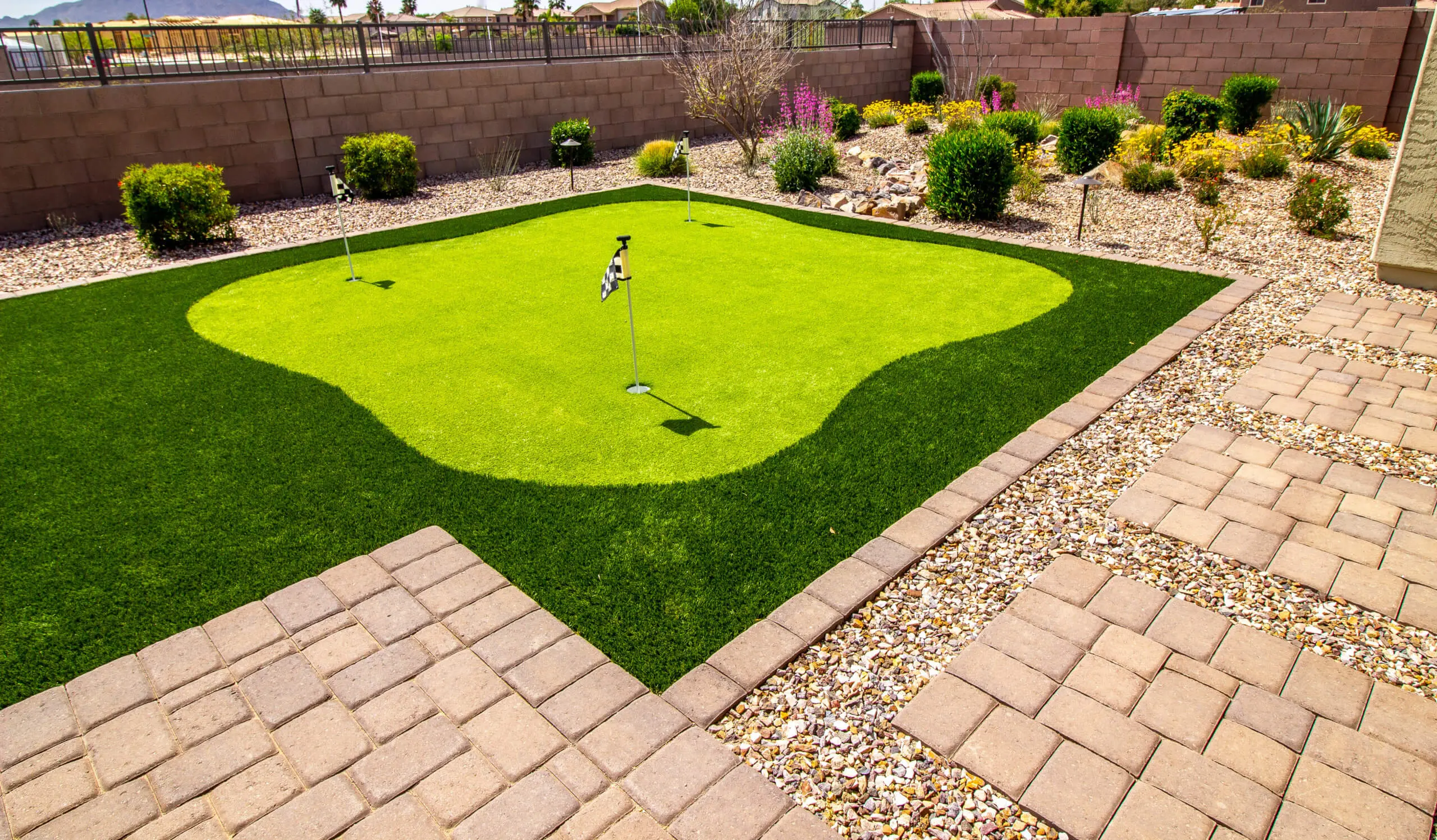
Practice your short game anytime with a custom backyard putting green. Our professional installation creates a true-rolling surface that golf enthusiasts will love, complete with custom contours and challenging breaks.
Primary Fit
Putting Green Installation
Service Area
Sugar Land + nearby cities
Common Uses
Improve your golf game at home
Project Goal
True-rolling professional surfaces
What The Work Includes
Key features
- True-rolling professional surfaces
- Custom green contours and breaks
- Multiple hole placements
- Chipping areas available
- Fringe and rough options
Why Customers Choose It
Project benefits
- Improve your golf game at home
- Perfect for entertaining guests
- Low maintenance luxury feature
- Increases property value
- Year-round practice opportunity
Detailed Service Content
More about putting green installation
The long-form service copy stays intact, but it now renders inside the redesigned content system rather than the older template.
Putting greens are one of the more precise installations in synthetic turf work. The performance standard is specific—ball roll needs to be consistent, true to the line, and predictable enough to translate practice into actual improvement on a course. Building a putting green that delivers that performance in a Sugar Land backyard requires different product selection, construction methodology, and design approach than a standard lawn installation.
The Sugar Land Context for Private Putting Greens
Fort Bend County's residential character supports the private putting green market. Sugar Land's household income demographics, the proximity of significant golf courses—Sweetwater Country Club, First Colony Country Club, the Quail Valley clubs—and the extended outdoor season create conditions where a backyard putting green is a reasonable investment rather than a pure luxury. Members of Sweetwater and First Colony Country Club who play regularly understand what a well-constructed practice green should feel like. That standard shapes what we aim to deliver in a residential installation.
Beyond the golfer population, putting greens in Sugar Land serve a secondary function as distinctive outdoor entertaining features. A custom-contoured putting green with multiple hole configurations and fringe surrounding it creates an outdoor focal point that works for entertaining guests across generations and skill levels.
Product Selection: What Makes a Putting Surface Perform
Putting green turf is a fundamentally different product from residential lawn turf. The key differences are pile height, face weight distribution, and fiber stiffness.
Pile height on a putting green surface is short—typically 0.5 to 0.75 inches—compared to 1.5 to 2 inches on a residential lawn product. This short pile creates the dense, firm surface that allows the ball to travel across the green without the resistance and inconsistency that a taller pile would create. The pile height also affects how the ball breaks on contoured sections—a shorter, denser pile allows more subtle green reading, closer to what players experience on a course.
Fiber stiffness matters for ball roll. Nylon fibers are standard for putting green installations because nylon's tensile strength and recovery characteristics support consistent ball roll performance over time. Nylon maintains its upright position under repeated ball contact and mallet stroke without the fiber fatigue that softer polyethylene products develop. Nylon also holds its performance through Sugar Land's temperature range—the expansion and contraction cycle through a Fort Bend year does not change nylon's performance the way it can affect softer fibers.
Face weight in putting green products is high—typically 60 to 90 ounces per square yard—distributed across short fibers. This creates the dense, stable surface that supports accurate ball roll and consistent performance across the full green footprint.
Green Design and Contouring
The visual distinction between a quality custom putting green and a flat square of short synthetic grass is contouring. Natural putting greens at course level are contoured to create breaks, elevation changes, and reading challenges that make the short game intellectually interesting. A flat putting surface without contour is a practice tool for developing stroke mechanics only—it does not develop the ability to read and adjust to break.
We design backyard putting greens with contour built into the base construction. Gentle elevation changes—typically two to six percent grade changes distributed across the green surface—create left-to-right, right-to-left, and uphill/downhill break scenarios within a compact footprint. The scale of the contour is calibrated to the size of the green: a 500-square-foot green can support more dramatic contour than a 200-square-foot green, where sharp grades would create disproportionately challenging putts.
For Sugar Land homeowners who play regularly at First Colony Country Club or Sweetwater, we discuss what break characteristics they want to practice—do they want to work on reading left-to-right breaks they encounter on a specific course, or a general variety of scenarios? That conversation shapes the contour design before any construction begins.
Multiple Hole Configurations and Practice Layouts
A well-designed backyard putting green in Sugar Land typically includes three to five cup locations arranged to create multiple practice scenarios from different positions. Cup placement is planned so that a golfer can work through multiple lengths—short putts of two to four feet, medium putts of eight to twelve feet, and longer lag putts of fifteen to twenty feet if the footprint allows.
For larger installations—the half-acre lots in Greatwood and New Territory where the backyard can accommodate a genuinely substantial green—we design with a practice sequence in mind: a dedicated approach shot zone, a chipping fringe, and a contoured putting surface with intentional flow from approach to putting to the exit path.
For smaller footprints—the more compact backyards in Telfair or First Colony's newer village sections—we design for maximum use out of available square footage, which often means a multi-directional layout where the same cup serves as both a target and a departure point depending on where the golfer positions.
Fringe and Surround Integration
A putting green without fringe is a putting surface in isolation. The fringe zone around the green serves both a functional purpose—providing a transition from the rough of the yard to the precision of the putting surface—and a design purpose, creating visual context that makes the green read as a complete golf feature rather than a geometric synthetic installation.
We typically install fringe turf at a pile height of 1 to 1.5 inches, slightly taller than the putting surface and slightly shorter than the surrounding lawn. The fringe creates a chip shot scenario—approaching the edge of the green from the fringe requires a different technique than putting—and adds the visual definition that distinguishes a well-designed private green from a simple synthetic mat.
For homeowners who want a complete short game practice area rather than only putting, we extend the design to include a chipping zone—a longer-pile turf area at natural grass height from which standard chip and pitch shots can be practiced. This zone typically begins 10 to 30 feet from the green edge depending on available space and desired shot difficulty.
Installation Process and Site Requirements
The base construction for a putting green is more involved than a standard lawn installation. The sub-base needs to be firm enough to support the contour design without settling under foot traffic and ball impact over time. We use crushed aggregate compacted to a higher density specification than residential lawn base construction, layered to create the contour profile before turf is installed.
Drainage beneath a putting green is important even though the surface drains well—pooling water beneath the base can cause substrate movement that changes the contour over time. We install a perimeter drainage solution around most Sugar Land putting greens to manage subsurface moisture at the base layer.
The finishing process—setting cups, trimming perimeter edges, distributing infill, and making final brushing passes—requires time and care. A putting green is inspected for ball roll consistency across multiple lines before we consider it complete.
Project Step
Consultation
We evaluate the site, traffic level, drainage, edges, and how you want the surface to perform once the project is finished.
Project Step
Product Match
Material selection is tied to the project. Lawn replacements, pet areas, putting greens, and commercial spaces all need different performance priorities.
Project Step
Prep + Install
Base work, seam placement, edges, and infill are all handled with the finished appearance and long-term stability in mind.
Project Step
Final Walkthrough
We review the completed surface with you, confirm care expectations, and make sure the space is ready for normal use.
FAQs
Questions about putting green installation
These answers remain tied to the service route and continue supporting the page’s FAQ schema.
What size putting green makes sense for a Sugar Land backyard?
Functional practice greens can be built in 200 square feet or less, though 400 to 800 square feet creates more shot variety and practice utility. We assess your available backyard footprint, desired hole count, and whether you want a chipping zone during the design consultation.
Why is nylon the right fiber for a backyard putting green?
Nylon's stiffness and tensile strength support consistent ball roll performance over time. Softer polyethylene fibers used in residential lawn products develop fiber fatigue under repeated ball contact and mallet stroke that changes the roll surface over time. Nylon holds its performance through Fort Bend's temperature range.
How realistic is the ball roll on a backyard synthetic putting surface?
A correctly built putting green with quality nylon fiber, appropriate pile height, proper infill, and contoured base delivers ball roll behavior that translates meaningfully to on-course play. It is not identical to a course green—firmness and speed will differ—but break reading and stroke consistency developed on the practice green carry over.
Can a putting green be installed in a shaded Sugar Land backyard?
Yes. Shade is not a problem for synthetic turf the way it is for natural grass. For putting greens in shaded areas, we adjust drainage specifications to account for the slower surface drying that comes with reduced sun exposure.
How long does a custom putting green installation take?
A standard residential putting green installation in Sugar Land runs three to five days, including base construction, contour work, turf installation, cup setting, fringe installation, and final brushing. Larger installations with chipping zones or more complex contour take additional time.
Related Service Areas
Find this service in the cities we cover.
The service route now connects visually and structurally to the location pages instead of leaving the templates disconnected.